



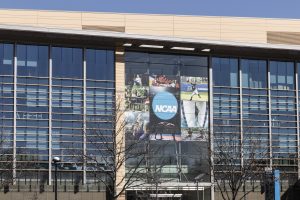
 Dunn Carney attorneys have secured a temporary restraining order preventing the National Collegiate Athletic Association from declaring University of Portland volleyball player Maui Robins ineligible under the NCAA’s new “5-in-5” eligibility rule.
Robins, a 2022 high school graduate, enrolled at the University of Portland that fall and competed during four consecutive volleyball seasons. After the NCAA adopted a new eligibility framework permitting athletes to compete for up to five seasons within a five-year period, Robins was offered a place on the university’s active roster and a full athletic scholarship for the 2026–27 academic year. She enrolled in graduate school, moved into student housing and began practicing with the team.
The NCAA, however, decided to deprive certain athletes, including many members of the high school class of 2022, from receiving a fifth season under the new rule.
A federal court in Colorado determined that the NCAA was wrong in its decision to exclude certain athletes from the benefit of its own rule and issued a preliminary injunction prohibiting the NCAA from applying that exclusion to certain 2022 graduates. After that injunction was stayed by the U.S. Court of Appeals for the Tenth Circuit on August 21, the NCAA decided Robins was ineligible to compete.
Dunn Carney filed suit on Robins’ behalf in Multnomah County Circuit Court on September 3, asserting claims for breach of contract and violations of the Oregon Antitrust Act. The complaint challenges the NCAA’s implementation of its new eligibility rule and alleges that the exclusion of Robins and similarly situated athletes is contrary to the NCAA’s own bylaws, arbitrary and anticompetitive.
On September 4, the court granted Robins’ motion for a temporary restraining order. The order prevents the NCAA from declaring her ineligible to practice or compete during the 2026–27 academic year and from interfering with the University of Portland’s decision to allow her to participate on its Division I women’s volleyball team. It also prohibits the NCAA from taking adverse action against the university, its coaches or Robins’ teammates based on her participation under the order.
The court found that Robins faced immediate and irreparable harm because the volleyball season had already begun and “a season of competition once lost cannot be restored.” A hearing concerning a longer injunction is scheduled for September 14.
The temporary restraining order is preliminary relief. The court has not entered a final judgment on the merits of Robins’ claims.
The Dunn Carney team representing Robins includes Joshua Stump, April Stone and Kevin Sasse.
Student-athletes, families, coaches or universities confronting eligibility questions arising from the NCAA’s 5-in-5 rule may contact April Stone or Joshua Stump at astone@dunncarney.com.
